
 Vetiverol
Root & Husk Oils
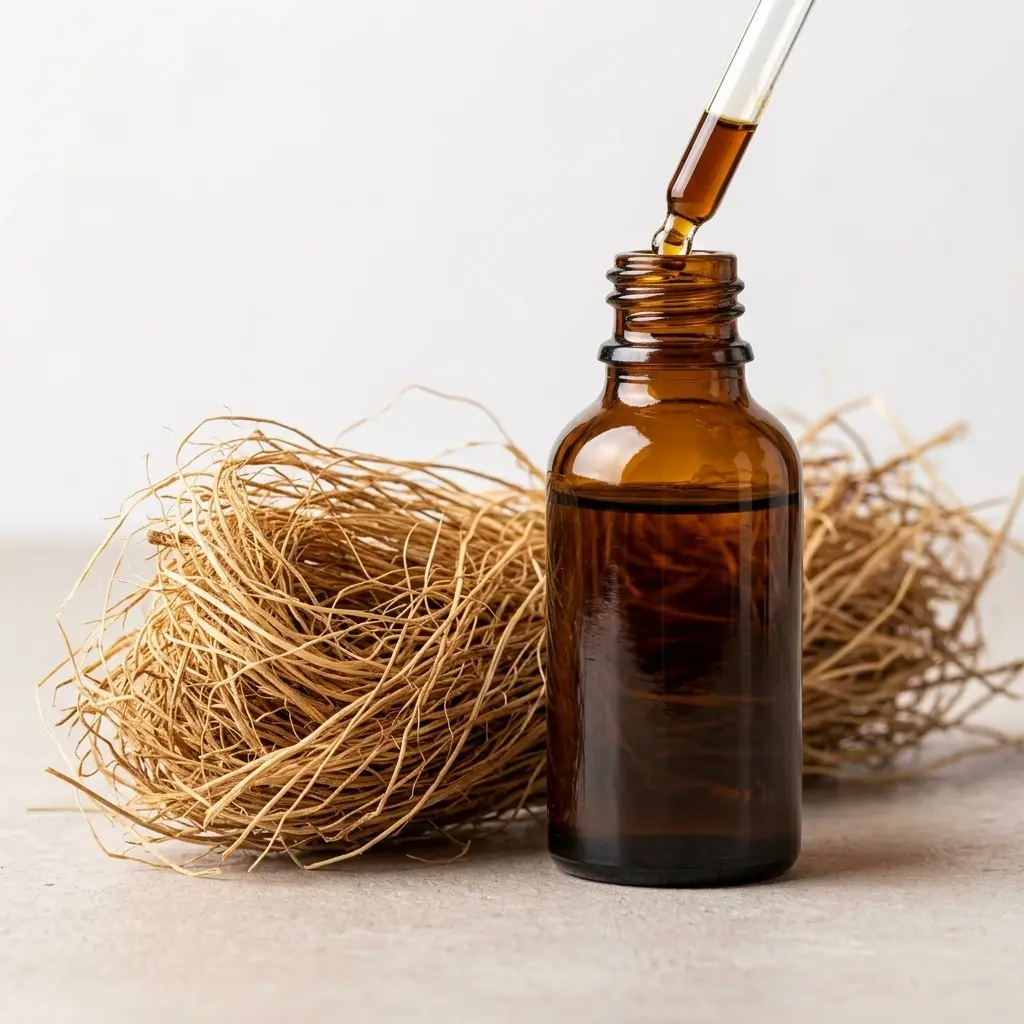
Vetiver Oil
Chrysopogon zizanioides
Vetiver Oil is sourced from Chrysopogon zizanioides.
- Botanical Source
- Chrysopogon zizanioides
- Standardization
- Vetiverol
- CAS Number
- 8016-96-4
- Active Compound
- Vetiverol (C15H24O)
Request Bulk Quote
Tell us your requirement and our team will get back to you with availability and pricing.
About Vetiver Oil
Vetiver Oil is sourced from Chrysopogon zizanioides. It is offered standardized for Vetiverol, CAS 8016-96-4. Traditional and industrial applications include mental & emotional health:, calming and sedative, insomnia relief, adhd/focus.
Specifications
Technical Specification Sheet- Botanical Source
- Chrysopogon zizanioides
- Offering Grade
- Vetiverol
- CAS Number
- 8016-96-4
- Active Compound
- Vetiverol (C15H24O)
Applications & Benefits
401
Aromatherapy & Massage
02
Perfumery & Cosmetics
03
Skincare Formulations
04
Household
Related Products
More from Root & Husk Oils
Frequently Asked Questions
What is the botanical source of Vetiver Oil?
Vetiver Oil is sourced from Chrysopogon zizanioides.
What is the CAS number for Vetiver Oil?
Vetiver Oil carries CAS number 8016-96-4.
What grade is Vetiver Oil offered in?
Vetiver Oil is offered standardized for Vetiverol.
What is Vetiver Oil used for?
Vetiver Oil is commonly used for Aromatherapy & Massage.
What are root and husk oils?
These are essential oils obtained by steam distillation of root and husk raw material, used in aromatherapy, perfumery, and pharmaceutical applications.
How is each root or husk oil specified?
Each product page lists the botanical source and the primary active compound the oil is characterized by.
Do any root or husk oils share the same botanical source?
Jhatamansi Oil and Spikenard Oil are both sourced from Nardostachys jatamansi and share the same CAS number (8022-22-8) under different trade names. Each product's page confirms its own botanical source and active compound.
Product Enquiry
Interested in Vetiver Oil?
Let us know what you need and our team will follow up with the right details for Vetiver Oil.