
 Linalyl Acetate
Leaf Oils
Petit Grain Mandarin Oil
Citrus reticulata
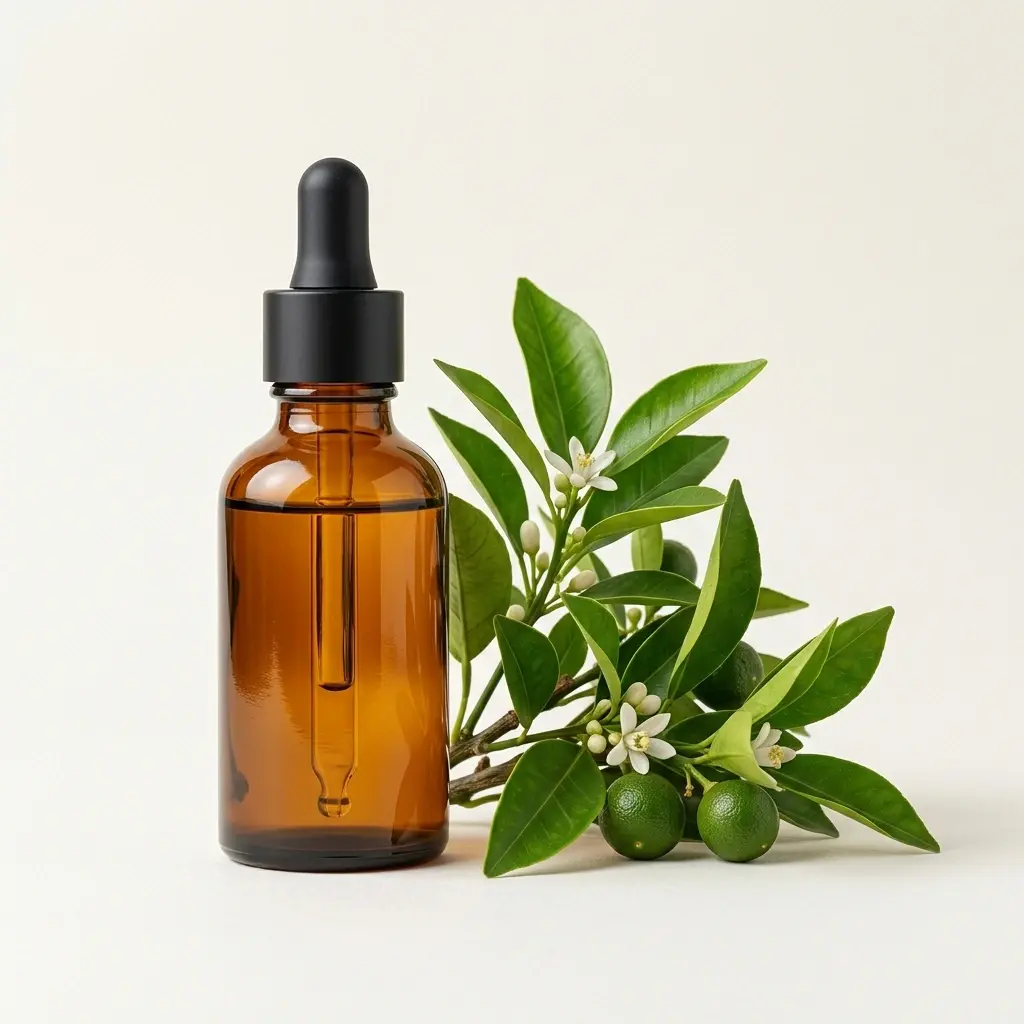
Petit Grain Mandarin Oil is sourced from Citrus reticulata.
- Botanical Source
- Citrus reticulata
- Standardization
- Linalyl Acetate
- CAS Number
- 8014-20-8
- Active Compound
- Linalyl Acetate (C12H20O2)
Request Bulk Quote
Tell us your requirement and our team will get back to you with availability and pricing.
About Petit Grain Mandarin Oil
Petit Grain Mandarin Oil is sourced from Citrus reticulata. It is offered standardized for Linalyl Acetate, CAS 8014-20-8. Distilled from the leaves and twigs of the Mandarin tree, distinct from Sureka Life Sciences' Citrus fruit Extract (Citrus aurantium) and Kaffir Lime Petitgrain Leaves Oil (Citrus hystrix), which are sourced from different Citrus species. Traditional and industrial applications include fine perfumery, aromatherapy, cosmetics, and household fragrance.
Specifications
Technical Specification Sheet- Botanical Source
- Citrus reticulata
- Offering Grade
- Linalyl Acetate
- CAS Number
- 8014-20-8
- Active Compound
- Linalyl Acetate (C12H20O2)
Applications & Benefits
401
Fine Perfumery
A soft, floral-citrus top note used extensively in fine fragrance and eau de cologne formulations.
02
Aromatherapy
Used in diffuser blends for its calming, uplifting citrus-floral aroma.
03
Cosmetics
Used in cosmetic and personal-care fragrance formulations.
04
Household Fragrance
Used in candles and household fragrance products for its fresh citrus note.
Related Products
More from Leaf Oils
Frequently Asked Questions
What is the botanical source of Petit Grain Mandarin Oil?
Petit Grain Mandarin Oil is sourced from Citrus reticulata.
What is the CAS number for Petit Grain Mandarin Oil?
Petit Grain Mandarin Oil carries CAS number 8014-20-8.
What grade is Petit Grain Mandarin Oil offered in?
Petit Grain Mandarin Oil is offered standardized for Linalyl Acetate.
What is Petit Grain Mandarin Oil used for?
Petit Grain Mandarin Oil is commonly used for Fine Perfumery.
What are leaf oils?
Leaf oils are essential oils obtained by steam distillation of leaves, supplied for pharmaceutical, cosmetic, food, and fragrance applications.
How is each leaf oil standardized?
Each product page states the botanical source and the active compound it is standardized for (for example, a percentage range of linalool or cineole), so the specification can be confirmed against your requirement.
Which leaf oils have a verified active-compound percentage range?
22 of the 62 leaf oils in this category are standardized to a verified active-compound percentage range, including Clove Leaves Oil (70-90% Eugenol), Eucalyptus Globolus Leaves Oil (60-90% Eucalyptol), Lemon Grass Leaves Oil (40-75% Citral), Spearmint Leaves Oil (50-80% Carvone), Rosemary Leaves Oil (15-53% 1,8-Cineole), Thyme Leaves Oil (20-55% Thymol), and Basil Leaves Oil (60% to 75% linalool). Each product's page states its exact range.
What quality systems apply to these leaf oils?
Sureka Life Sciences is ISO 9001:2015 certified for Quality Management and ISO 22000:2018 certified for Food Safety Management, and operates two dedicated R&D laboratories for standardization and analytical testing.
Product Enquiry
Interested in Petit Grain Mandarin Oil?
Let us know what you need and our team will follow up with the right details for Petit Grain Mandarin Oil.