
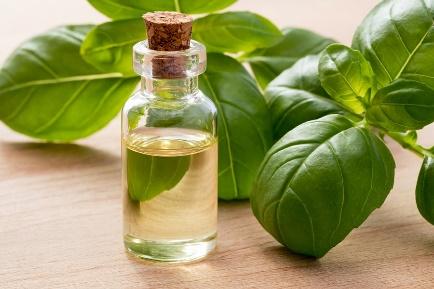
Basil Leaves Distillation
Basil Leaves Distillation
About Basil Leaves Distillation
Basil Leaves Distillation is sourced from Ocimum basilicum. It is offered standardized for 60% to 75% linalool, CAS 8015-73-4. Traditional and industrial applications include mental clarity & stress relief, aromatherapy, application, skin & hair care.
Applications & Benefits
16Mental Clarity & Stress Relief
-
Aromatherapy
The energizing, sweet-herbaceous aroma of basil oil helps reduce mental fatigue, calm anxiety, and promote focus.
Application
Add 3-5 drops to an ultrasonic diffuser or inhale directly from the bottle to clear brain fog and alleviate headaches.
Skin & Hair Care
-
Acne & Irritation
Thanks to its antibacterial and anti-inflammatory qualities, it is used to unclog pores, reduce acne swelling, and treat minor skin infections.
Hair Growth
Massaging the scalp with basil oil stimulates hair follicles, promotes circulation, and helps combat dandruff.
Application
Always dilute with a carrier oil (like coconut or jojoba oil) before applying topically to your skin or scalp.
Muscle & Joint Relief
-
Soothing Aches
Its anti-inflammatory nature makes it an excellent remedy for sore, swollen muscles and arthritic discomfort.
Application
Mix a few drops with a carrier oil to create a soothing massage blend for affected areas.
Digestive Support
-
Relieving Distress
Basil oil possesses carminative properties that help ease bloating, indigestion, flatulence, and stomach cramps.
Application
Dilute and gently massage the abdomen in a clockwise motion to promote digestive comfort.
Respiratory Relief
-
Congestion
The antibacterial and expectorant properties help clear mucus and phlegm from the nasal passages.
Application
Add a few drops to a bowl of hot water and inhale the steam to help with sinus congestion, asthma, or a dry throat.
Specifications
Technical Specification Sheet- Botanical Source
- Ocimum basilicum
- Offering Grade
- 60% to 75% linalool
- CAS Number
- 8015-73-4
- Active Compound
- linalool (C10H18O)
Frequently Asked Questions
What is the botanical source of Basil Leaves Distillation?
Basil Leaves Distillation is sourced from Ocimum basilicum.
What is the CAS number for Basil Leaves Distillation?
Basil Leaves Distillation carries CAS number 8015-73-4.
What grade is Basil Leaves Distillation offered in?
Basil Leaves Distillation is offered standardized for 60% to 75% linalool.
What is Basil Leaves Distillation used for?
Basil Leaves Distillation is commonly used for Mental Clarity & Stress Relief.
What are leaf oils?
Leaf oils are essential oils obtained by steam distillation of leaves, supplied for pharmaceutical, cosmetic, food, and fragrance applications.
How is each leaf oil standardized?
Each product page states the botanical source and the active compound it is standardized for (for example, a percentage range of linalool or cineole), so the specification can be confirmed against your requirement.
Which leaf oils have a verified active-compound percentage range?
22 of the 62 leaf oils in this category are standardized to a verified active-compound percentage range, including Clove Leaves Distillation (70-90% Eugenol), Eucalyptus Globolus Leaves Distillation (60-90% Eucalyptol), Lemon Grass Leaves Distillation (40-75% Citral), Spearmint Leaves Distillation (50-80% Carvone), Rosemary Leaves Distillation (15-53% 1,8-Cineole), Thyme Leaves Distillation (20-55% Thymol), and Basil Leaves Distillation (60% to 75% linalool). Each product's page states its exact range.
What quality systems apply to these leaf oils?
Sureka Life Sciences is ISO 9001:2015 certified for Quality Management and ISO 22000:2018 certified for Food Safety Management, and operates two dedicated R&D laboratories for standardization and analytical testing.
Related Products
More from Leaf Oils
Interested in Basil Leaves Distillation?
Let us know what you need and our team will follow up with the right details for Basil Leaves Distillation.