
 Cinnamaldehyde
CO2 Oils
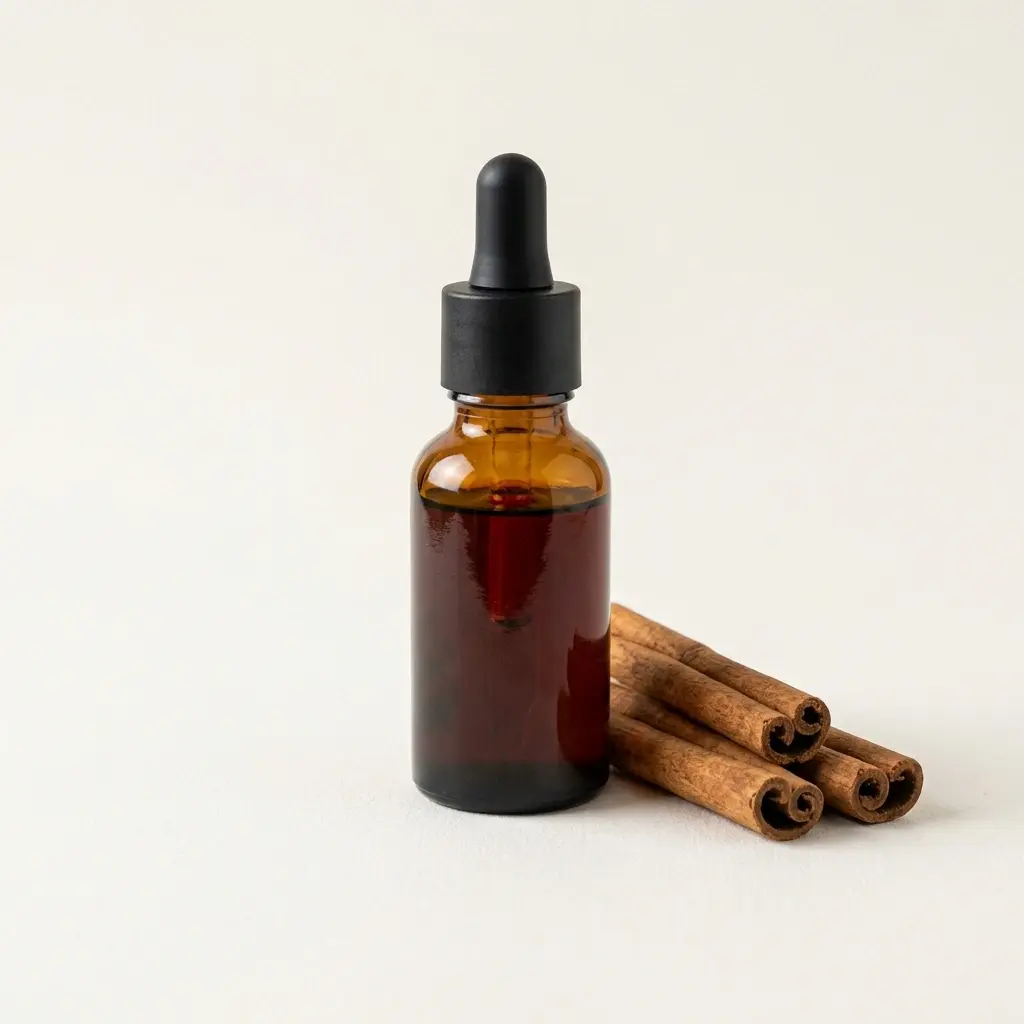
Cinnamon Bark Oil
Cinnamomum zeylanicum
Cinnamon Bark Oil is sourced from Cinnamomum zeylanicum.
- Botanical Source
- Cinnamomum zeylanicum
- Standardization
- Cinnamaldehyde
- CAS Number
- 8015-91-6
- Active Compound
- Cinnamaldehyde (C9H8O)
Request Bulk Quote
Tell us your requirement and our team will get back to you with availability and pricing.
About Cinnamon Bark Oil
Cinnamon Bark Oil is sourced from Cinnamomum zeylanicum. It is offered standardized for Cinnamaldehyde, CAS 8015-91-6. Extracted using supercritical CO2 extraction, distinct from Sureka Life Sciences' existing Cinnamon Bark Extract and Cinnamon Leaves Oil of the same species (Cinnamomum zeylanicum is an accepted synonym of Cinnamomum verum). It is used in fine perfumery, flavoring and food applications, and pharmaceuticals.
Specifications
Technical Specification Sheet- Botanical Source
- Cinnamomum zeylanicum
- Offering Grade
- Cinnamaldehyde
- CAS Number
- 8015-91-6
- Active Compound
- Cinnamaldehyde (C9H8O)
Applications & Benefits
401
Flavoring and Food Applications
Used in premium food and beverage flavoring for its warm, sweet-spicy cinnamon character.
02
Fine Perfumery
CO2-extracted cinnamon bark oil is valued for a richer, more rounded aromatic profile than steam-distilled oil.
03
Pharmaceuticals
Its retained cinnamaldehyde content is used in formulation development.
04
Aromatherapy
Used in diffuser blends for its warming, comforting spicy aroma.
Related Products
More from CO2 Oils
Frequently Asked Questions
What is the botanical source of Cinnamon Bark Oil?
Cinnamon Bark Oil is sourced from Cinnamomum zeylanicum.
What is the CAS number for Cinnamon Bark Oil?
Cinnamon Bark Oil carries CAS number 8015-91-6.
What grade is Cinnamon Bark Oil offered in?
Cinnamon Bark Oil is offered standardized for Cinnamaldehyde.
What is Cinnamon Bark Oil used for?
Cinnamon Bark Oil is commonly used for Flavoring and Food Applications.
What is CO2 extraction, and how does it differ from Sureka Life Sciences' distilled and solvent-extracted products?
CO2 extraction (supercritical CO2 extraction) uses pressurized carbon dioxide as a solvent-free extraction medium, distinct from steam distillation, hexane-based solvent extraction, and cold-pressing used elsewhere in the catalog. Each product page lists a botanical source, a named marker-compound grade, and a CAS number.
Does Sureka Life Sciences supply any CO2-extracted oil from the same plant as an existing product?
Yes — 11 of the 13 CO2 oils in this category (Black Pepper Oil, Cardamom Oil, Chilli Seed Oil, Cinnamon Bark Oil, Clove Bud Oil, Coffee Oil, Coriander Seed Oil, Cumin Oil, Fenugreek Oil, Ginger Oil, Kalonji Oil, and Turmeric Oil) are extracted from the same botanical species as an existing Sureka Life Sciences product in another category. Each is documented and supplied as a distinct commercial form, separate from the distilled oil, solvent extract, oleoresin, or cold-pressed carrier oil listed elsewhere in the catalog. Six of these — Black Pepper Oil, Cardamom Oil, Cumin Oil, Ginger Oil, Kalonji Oil, and Turmeric Oil — additionally carry "(CO2 Extracted)" in their product name to distinguish them from an identically-named existing Sureka Life Sciences product.
How is each CO2-extracted oil specified?
Each product page lists the botanical source, a named marker-compound grade, and a CAS number, so buyers can confirm it matches their formulation requirement before enquiring.
Product Enquiry
Interested in Cinnamon Bark Oil?
Let us know what you need and our team will follow up with the right details for Cinnamon Bark Oil.